
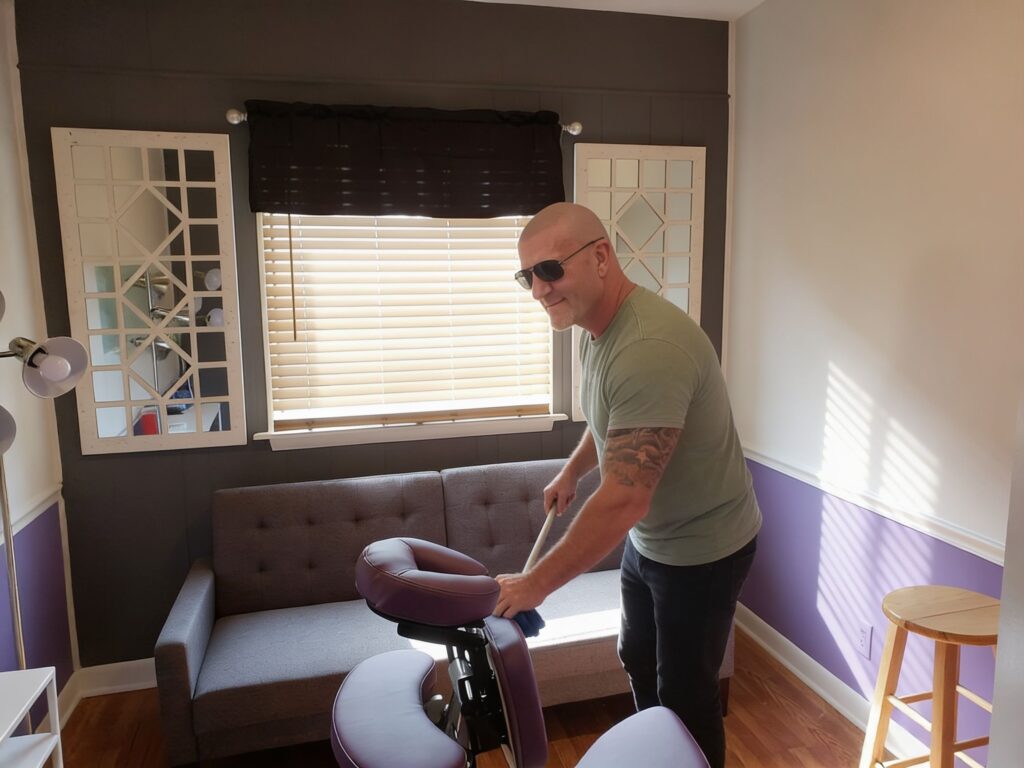
Yes, scalp micropigmentation can work with gray or white hair. I match the pigment to the appearance of your existing hair and scalp, then build soft follicle-like shading to reduce contrast. The result is not new hair, but a visual impression of fuller coverage or closely shaved stubble.
Why does scalp micropigmentation work on gray hair?
Gray or white hair does not automatically rule out treatment. The main issue is contrast. When the scalp is noticeably lighter than the hair, thinning areas, a receding hairline or a bald crown can stand out more clearly. SMP places tiny deposits of cosmetic pigment into the scalp to soften that difference.
For men with gray hair, I am not trying to make the scalp look dark or create a solid block of color. I am aiming for subtle follicle-style points that sit naturally with the hair you still have. With white hair, the desired effect can be especially soft, similar to the look of light stubble when the head is kept closely shaved.
This is why color choice and density matter so much. Pigment is selected to relate to your current hair color and the overall appearance of your scalp. A professional should also consider your skin tone, how much hair remains, your preferred haircut and whether you want to keep some length.
If you would like the longer answer to this specific concern, I have also explained whether SMP is suitable when you have a lot of gray hair.
What can SMP do for men with thinning gray hair?
Male scalp micropigmentation can be used in more than one way. Some men want the appearance of an even, closely shaved head. Others want to keep their existing hair and reduce the amount of scalp showing between strands. In that situation, I work between the hair rather than treating only a completely shaved scalp.
This density approach can be useful when gray hair has become finer or when the crown and hairline look less full than they used to. The pigment does not grow hair, change your natural growth pattern or repair a hair follicle. It creates a visual effect that can make the overall coverage appear more consistent.
SMP can also help disguise scalp scars, including scars left by hair transplant procedures. Scar tissue can take pigment differently from surrounding skin, so it needs to be assessed carefully and treated with an appropriate plan rather than approached as ordinary scalp.
The best outcome is usually one that people do not notice as a cosmetic tattoo. They see a more even-looking scalp, a softer transition at the hairline or less visible show-through. I set that expectation clearly because some scalp remains visible through natural hair, and a realistic result should not look like a fully painted, dense scalp.
Should you shave your head before treatment?
Not necessarily. The right approach depends on your goal, your existing hair and the length you normally wear. Men who want a shaved or buzz-cut appearance may find it easier to maintain a consistent short style. Men seeking the appearance of density may be able to keep their hair while pigment is placed between existing strands.
If your hair is white or very light, the way light reflects from it can affect the finished appearance. Keeping it short may make the shading easier to see as a cohesive look, but I would discuss that with you rather than assume a particular haircut is right.
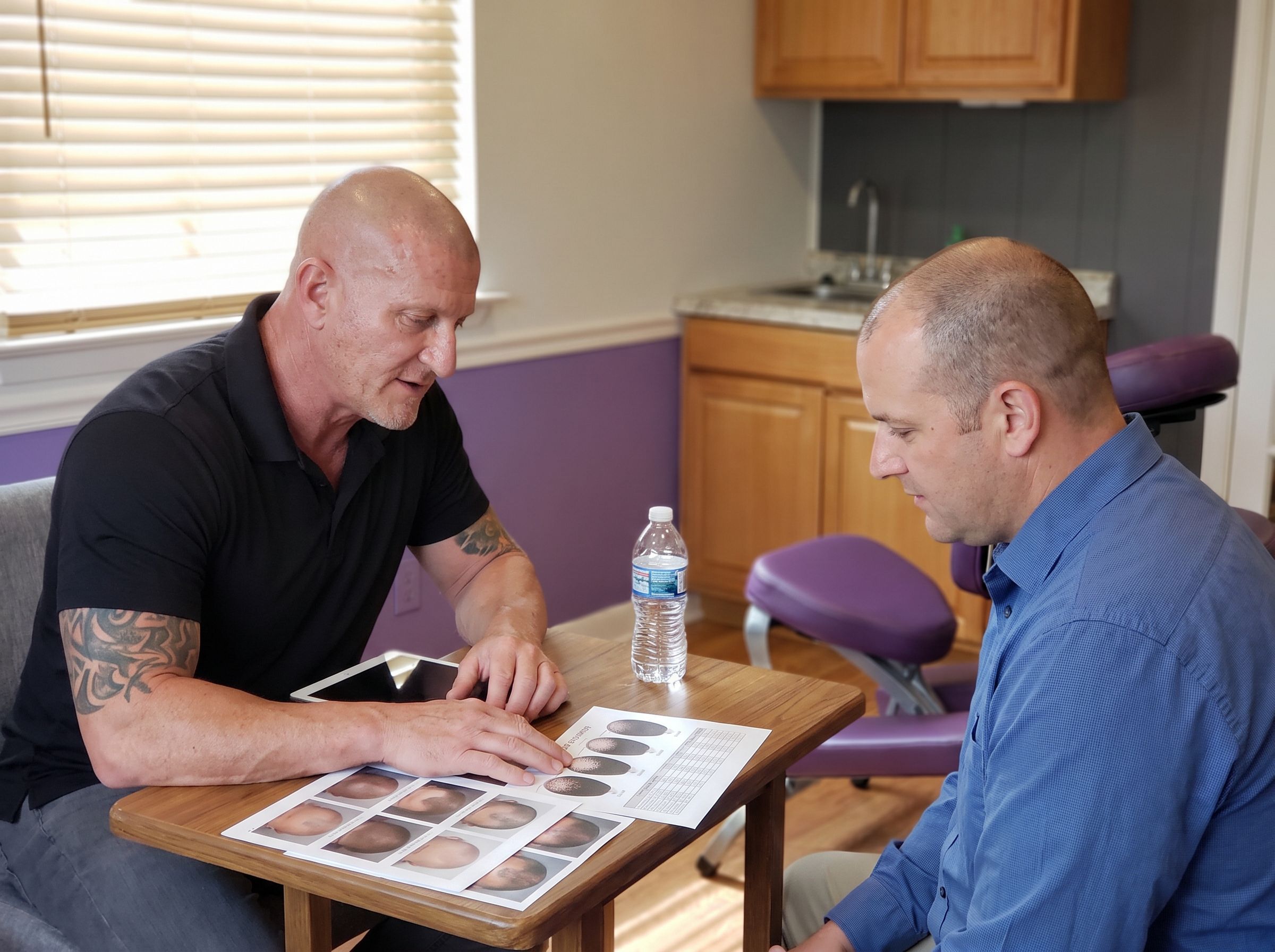
A consultation is important before deciding. I look at the pattern of hair loss, the condition of your scalp, any scars, your usual grooming routine and the result you have in mind. You can read more about SMP with a shaved head or buzz cut if that is the style you are considering.
What happens during a gray-hair SMP appointment?
Before treatment, wash your hair and scalp as advised and arrive with the area clean. We discuss the treatment area and agree on the hairline. For a fully bald client, the hairline should reflect facial structure and age rather than looking artificially low or ruler-straight. I also assess the pigment direction and tone against your hair and skin.
Numbing medicine is used to make the procedure more comfortable. SMP uses fine needles to place small amounts of pigment in the epidermal and upper dermal layers. The aim is controlled placement without the spread associated with going too deep. Treatment is normally completed as a course of sessions, because gradual layering allows the appearance to be assessed as the skin heals.
Immediately after a session, the area can look stronger or darker than the healed result. Lightening during healing is normal. Do not judge the final appearance while the scalp is still settling, and do not pick scabs or interfere with the skin outside the aftercare instructions.
There is no surgery or incision. Even so, this is a cosmetic tattoo procedure, so provider experience, hygiene and careful consultation matter. Before choosing a practitioner for scalp micropigmentation for men, review real healed examples, not only fresh work. Pay particular attention to hairline transitions, density work and how gray or white hair has been handled.
How should you care for SMP on a gray-haired scalp?
After treatment, keep the scalp dry and avoid washing, shaving and activities that cause sweating during the initial healing period specified in your aftercare instructions. A shower cap can help when bathing. Avoid hot showers, heavy exercise, steam rooms and direct sun exposure while the skin is healing.
Once gentle washing is allowed, use the method discussed at consultation and avoid rubbing or scratching. A petrolatum-based moisturizer such as Aquaphor or Vaseline may be recommended twice daily to help prevent scab formation. Long term, broad-spectrum sunscreen helps protect the pigment from sun-related fading.
Healing is gradual, and the color may look different at several stages. Normal grooming can usually resume as the scalp settles, but swimming pools need to be avoided for the specified healing period. If you notice unusual warmth, increasing redness, excessive swelling, unusual discomfort or another concern beyond what we discussed, contact your practitioner promptly.
Results are intended to be long lasting, but they do fade over time through natural skin changes and sun exposure. Skin type, lifestyle, grooming and scalp condition all influence longevity. A touch-up may eventually be appropriate, and SMP can be removed later with laser treatment if necessary.
How do you choose the right SMP practitioner?
Start with the work, especially healed hairlines. A hairline that is too sharp, too dark or poorly matched can make the result look unnatural, and gray hair leaves little room for careless color choices. Ask to see examples that resemble your hair color, skin tone and level of loss.
Ask how the practitioner handles allergies, hygiene, pigment selection, scars and aftercare. Disclose allergies and relevant medical information before proceeding. SMP should be avoided by people prone to keloid scarring, and it does not diagnose or treat the cause of hair loss.
My own interest in this work began with my experience of hair loss and multiple hair transplant procedures. I understand the practical concerns around visible scars, changing density and wanting a shorter hairstyle. At Carolina Scalp Center in Raleigh, I offer shaved SMP, scar treatment, hair tattoo and male density services.
You can review the scalp micropigmentation treatment options before getting in touch. If you are considering treatment, I am happy to assess your hair and goals during a consultation.
Contact Carolina Scalp Center to arrange a consultation when you feel ready.
Frequently asked questions
Will SMP make white hair look darker?
It should not be used to turn white hair into dark-looking hair. The purpose is to reduce the visible contrast between scalp and hair with carefully placed, subtle pigment. Your hairstyle, remaining density and skin tone all affect the plan, so the shade and amount should be discussed during consultation.
Can SMP work if I still have a lot of natural hair?
Yes. SMP can be placed between existing hairs to reduce scalp show-through, rather than requiring a completely shaved head. This is often considered for thinning through the crown or top. The treatment plan depends on how much hair remains, its length and whether you want a density effect or a shaved appearance.
Does SMP cover a white scalp completely?
No. A realistic result does not make the scalp look fully painted or completely opaque. It uses small points of pigment to create visual shading and reduce contrast. Some scalp visibility is normal, particularly in bright light or where hair is very thin.
Can I continue coloring my gray hair after SMP?
Hair color is a personal grooming choice, but it can change the contrast between your hair and the implanted pigment. Discuss planned coloring during consultation so the treatment is designed with your likely appearance in mind. Do not apply products to healing skin until your practitioner says it is appropriate.
Is SMP suitable for a receding hairline with gray hair?
It may be suitable, depending on your scalp, pattern of loss and expectations. The hairline should be designed around your facial structure and age, not simply brought forward to recreate a youthful outline. Careful transition work is particularly important when the surrounding hair is gray or white.
Can gray-haired men have density SMP without shaving?
Potentially, yes. Density work is placed through existing hair to make the scalp less noticeable. It is not the same visual effect as a shaved follicle look, and the result depends on hair length, texture, thinning pattern and the amount of scalp showing. A consultation is needed to assess suitability.
Does SMP change as my hair becomes whiter?
Your natural hair may continue to change independently of the pigment. A well-planned treatment uses a restrained shade and a design that can remain compatible with gradual graying. If your hair color or grooming style changes significantly, a future assessment or touch-up may be useful.