
You may support healthier hair with good nutrition, gentle scalp care, and appropriate medical advice, but home remedies cannot reliably recreate lost density. SMP does not grow hair either. It creates the appearance of fuller hair by placing pigment between existing hairs, so the better option depends on whether you want regrowth or a cosmetic improvement.
What can naturally improve male hair density?
When men search for how to increase hair density male naturally, they are often hoping for a simple oil, supplement, or home remedy. I understand that appeal. However, the first step is working out why your hair is thinning, because nutrition, genetics, hormones, illness, stress, and scalp conditions can require very different approaches.
Eating a balanced diet and correcting a confirmed nutritional deficiency may support normal hair growth. Gentle washing, avoiding unnecessary traction, and protecting the scalp from excessive sun can also support good scalp care. These steps are sensible, but they do not reliably reverse male pattern hair loss or restore follicles that have become inactive.
I would be cautious with claims that a particular oil, massage routine, or household treatment can permanently increase density. Massage may feel pleasant, and some products may improve the way hair looks or behaves, but that is not the same as creating new follicles. Speak with a qualified medical professional if your loss is sudden, patchy, itchy, painful, or progressing quickly.
Medical options may be appropriate for some men, but they need an individual assessment. A doctor or hair-loss specialist can discuss the likely cause, possible treatments, side effects, and whether testing is needed. SMP can sit alongside those choices, but it does not diagnose, prevent, or treat the underlying cause of hair loss.
Does SMP increase hair density?
No. SMP does not grow hair, change natural hair growth, or make existing follicles produce more hair. It is a non-surgical cosmetic tattoo treatment that places tiny dots of cosmetic-grade pigment in the scalp. Those dots reduce the contrast between your hair and scalp, creating the visual impression of greater density.
That distinction matters. If you want biological regrowth, SMP is not a replacement for medical evaluation or hair-restoration treatment. If your main concern is visible scalp showing through your existing hair, or the way thinning affects your hairstyle, SMP may provide a practical cosmetic answer.
Male density SMP is designed for men who still keep some hair length. Pigment is placed between existing hairs rather than creating only a shaved-head appearance. This can make sparse areas look less see-through while allowing you to keep your current style. You can read more about male density SMP for thinning hair before deciding whether that approach matches your goals.
The result should not look like a solid, painted scalp. Some scalp showing through is normal and helps the finish remain believable. The pigment is selected to match your current hair follicle color, and placement must follow your existing pattern, hairline, and level of thinning.

When might SMP be a better option than home remedies?
I see SMP as an option for appearance, not a promise of regrowth. It may make sense when you have tried to understand your hair loss, accepted that your density may not return naturally, and want to reduce the visible contrast between scalp and hair.
It can be considered for male pattern baldness, thinning hair, a receding hairline, donor scars, or areas that remain visibly sparse after a transplant. It can also work between existing hairs, so you do not automatically need to shave your head. The right plan depends on your hair color, texture, thinning pattern, skin, and expectations.
There are limits. SMP cannot make a severely thin area behave like a fully dense head of hair, and it does not stop future hair loss. If your surrounding hair continues to thin, the plan may need reviewing later. That is why I prefer to discuss how your hair may change over time rather than simply focusing on the immediate visual effect.
I explain the difference between cosmetic camouflage and other approaches in this guide to serum or scalp micropigmentation for thinning hair. For some people, the answer is a combination of ongoing hair-loss care and an appearance-focused treatment.
What should you check before choosing an SMP practitioner?
Start by reviewing real examples of the practitioner’s work, paying particular attention to healed results and hairline design. A hairline that is too low, too straight, too dark, or too uniform can make the overall treatment look unnatural. The goal is not to draw attention to the treatment. It is to create a pattern that makes sense with your age, facial structure, and existing hair.
Ask what pigment is used, how the treatment is planned, and what happens if you later need lightening or removal. SMP is intended to be permanent, although it fades over time and can be removed with laser treatment, and removal can be more complicated if the original work was poor. Poor placement, excessive depth, or unsuitable color can make correction more complicated, so experience matters from the first appointment.
Your practitioner should discuss allergies, medical history, scalp condition, keloid scarring, lifestyle, and expectations. SMP should generally be avoided if you are prone to forming keloids. A licensed and experienced cosmetic or body artist should also follow local licensing and hygiene requirements and hold appropriate bloodborne pathogens training.
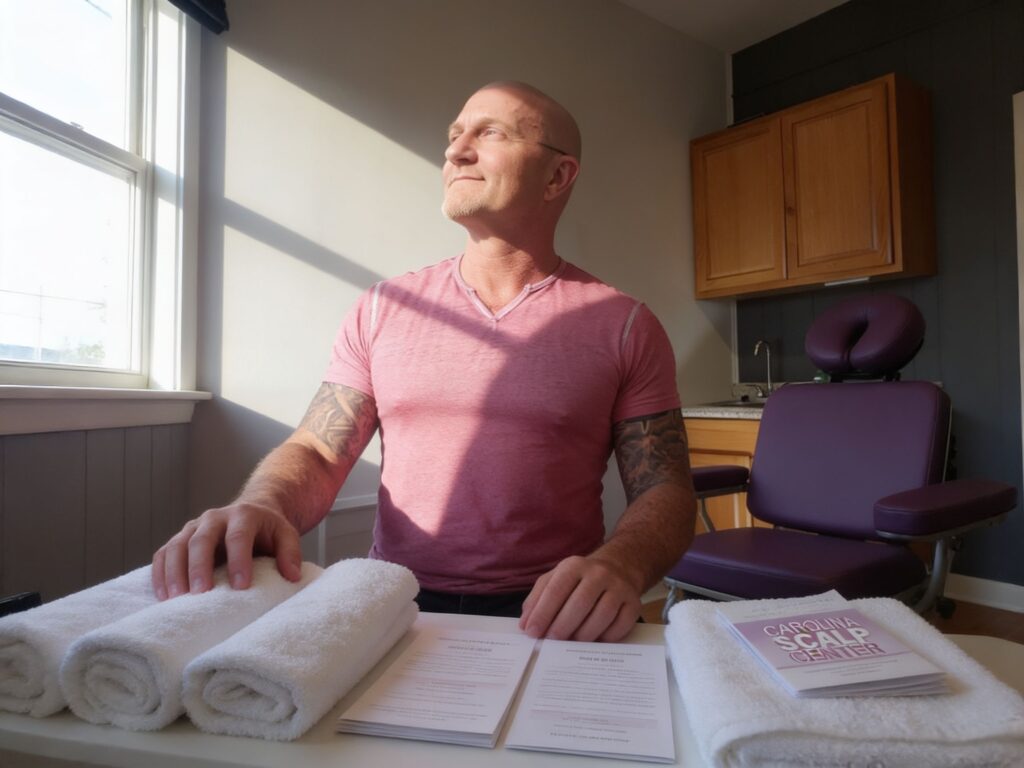
At Carolina Scalp Center in Raleigh, North Carolina, I offer male density SMP, shaved SMP, scar camouflage, and hair tattoo services. If you have questions, you can contact Carolina Scalp Center. My own hair-loss experience began when I was young, and after years of hair-transplant procedures, I discovered SMP in 2012. That background is one reason I am direct about what this treatment can and cannot do.
What happens during and after density SMP?
Before treatment, wash your hair and scalp. During the consultation, I assess the thinning pattern, discuss the result you want, and agree the treatment areas and hairline where relevant. I match the pigment to your hair and apply numbing medicine. The work is built gradually so the dots can blend with your existing hair rather than creating an artificial block of color.
A full scalp treatment commonly takes several appointments, with time between them for the scalp to heal. The exact plan varies according to the area, skin, hair, and amount of density required. I would rather set a realistic plan than rush toward a result that appears too dark or crowded.
After treatment, follow the aftercare instructions carefully. Informationally, the usual priorities are keeping the scalp dry, avoiding shampoo, heavy exercise, steam rooms, hot showers, swimming, and direct sun during the early healing period. Do not pick scabs or interfere with the area. Color lightening during healing can be normal, so try not to judge the final appearance immediately.
Once healed, protect the scalp from the sun with broad-spectrum sunscreen. SMP does not wash out with shampoo, but natural skin exfoliation and sun exposure contribute to fading. Touch-ups may eventually be useful, and timing varies by skin, lifestyle, pigment retention, and how your hair changes.
If you are weighing natural hair-loss support against a cosmetic density treatment, You are welcome to book a consultation if you would like to talk through the options.
Frequently asked questions
Can hair vitamins increase male hair density?
Hair vitamins are most likely to help when a person has a confirmed deficiency. Taking more than you need does not guarantee thicker hair and some supplements can cause problems or interfere with testing. If thinning is persistent, sudden, or accompanied by scalp symptoms, discuss evaluation with a qualified medical professional rather than relying on supplements alone.
Can scalp massage regrow a receding hairline?
Scalp massage may be relaxing and can encourage you to care for your scalp gently, but it should not be presented as a dependable way to regrow a receding hairline. Male pattern loss is influenced by biological factors that massage does not correct. It may support routine care, but it is not an SMP alternative.
Can I have density SMP if I am still using hair-loss medication?
Some people use SMP while continuing a hair-loss treatment, but the decision needs individual planning. Your practitioner should understand your current pattern, likely future changes, and any scalp effects from your medication. SMP can camouflage visible scalp, but it does not replace prescribed treatment or address the mechanism causing your hair loss.
Will density SMP look natural with longer hair?
It can be planned for longer hair when enough existing hair remains to blend with the pigment. The dots are placed between hairs to reduce visible scalp, rather than creating a close-shaved follicle pattern. Your hair color, texture, thinning level, and styling habits all affect whether density treatment is suitable.
How long should I wait before judging my SMP result?
Do not judge the final result while the scalp is still healing. The area can look darker or stronger at first, then soften as the skin settles and the color lightens. Your practitioner should explain the healing process and review the result at an appropriate point before deciding whether any refinement is needed.
Can SMP make future hair loss harder to notice?
SMP can reduce the contrast between scalp and hair in the areas treated, but future loss can change the balance around those areas. That is why a conservative plan and a realistic hairline are important. If your hair continues to thin, you may need a review so the appearance remains consistent with your current pattern.
Is SMP suitable for every man with thinning hair?
No. Suitability depends on the cause and stability of hair loss, scalp condition, expectations, skin, existing hair, and medical history. People prone to keloid scarring may not be suitable. A consultation should also cover allergies, pigment choice, hairline design, aftercare, and whether another option deserves consideration first.