
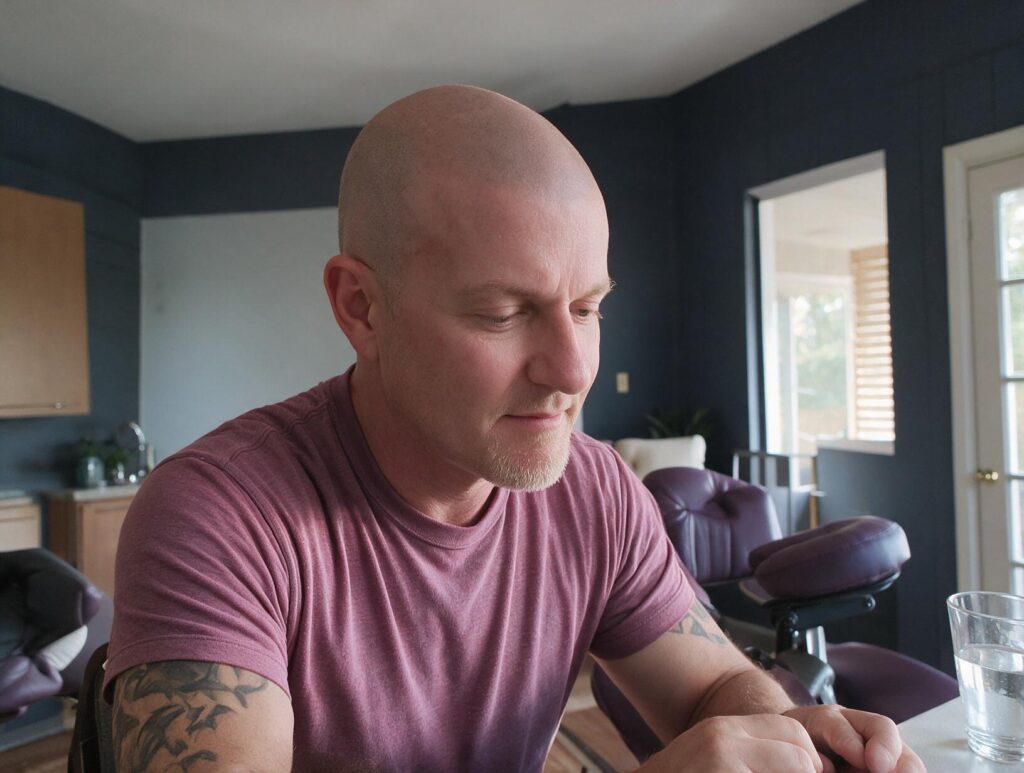
There is no single normal hair density for every man. Hair coverage varies with genetics, age, strand thickness, curl pattern and hair color. What matters most is whether your density is changing and how much scalp shows through. A professional assessment can distinguish normal variation from visible thinning and discuss suitable options.
What does hair density mean?
When I discuss hair density, I mean how much hair is growing within a specific area of the scalp. It is different from hair thickness. A man may have coarse strands but fewer hairs in an area, or fine strands that make the scalp look more visible even when the number of hairs has not changed much.
Dark hair against a light scalp can create more contrast than lighter hair, so the same amount of hair may look fuller on one person and thinner on another. Curl, wave, hairstyle and lighting affect what you see as well.
That is why the phrase normal hair density male does not have one useful answer for everyone. A pattern that has been stable for years may simply be your natural hair distribution. A gradual change at the temples, crown, hairline or throughout the top of the scalp deserves closer attention.
I have personal experience of this concern. My own hair loss began when I was around 19, followed by hair transplant procedures over the years. Even after those surgeries, I still found myself styling my hair to disguise areas that lacked fullness. That experience shapes the way I assess density today.
What is an average hair density for men?
People often search for an average hair density male figure, but a population average does not tell you whether your own hair looks healthy or whether treatment is appropriate. Density naturally differs between individuals, and it can change with age, genetics and the pattern of hair loss.
Rather than focusing on a single number, I look at where the scalp is visible, whether the change is symmetrical, how much hair remains, and how the area looks in the hairstyle you actually wear. The crown, frontal hairline and temples can all behave differently.
A useful home comparison is to take photographs in consistent lighting and from similar angles. Keep your hair at a similar length, avoid changing styling products between photographs, and compare the same areas over time. You can also part a small section of hair to observe scalp show-through, but this is only an indication, not a diagnosis.
For a more detailed self-check, I recommend reading this practical guide to measuring hair fullness. It explains why counting individual hairs is difficult and why strand thickness and lighting can alter your impression.
How can I tell whether my density is lower than normal?
Look for change rather than comparing yourself with someone else. Signs that your hair may be becoming less dense include increasing scalp visibility, a widening area at the crown, a hairline that is moving backward, or a hairstyle that no longer conceals the same areas.
Shedding can also be relevant, particularly if it starts suddenly or appears in patches. Redness, scaling, soreness or inflammation should not be treated as a cosmetic density issue. SMP does not diagnose, prevent or treat an underlying disease, so medical assessment is important when hair loss is sudden, patchy or accompanied by scalp symptoms.
It is also worth separating density from hair length. Longer hair can cover areas of lower density, while a very short cut can make scalp contrast more noticeable. If you are deciding on a haircut, this guide to choosing a flattering cut when hair is thinning may help you think about shape and coverage realistically.
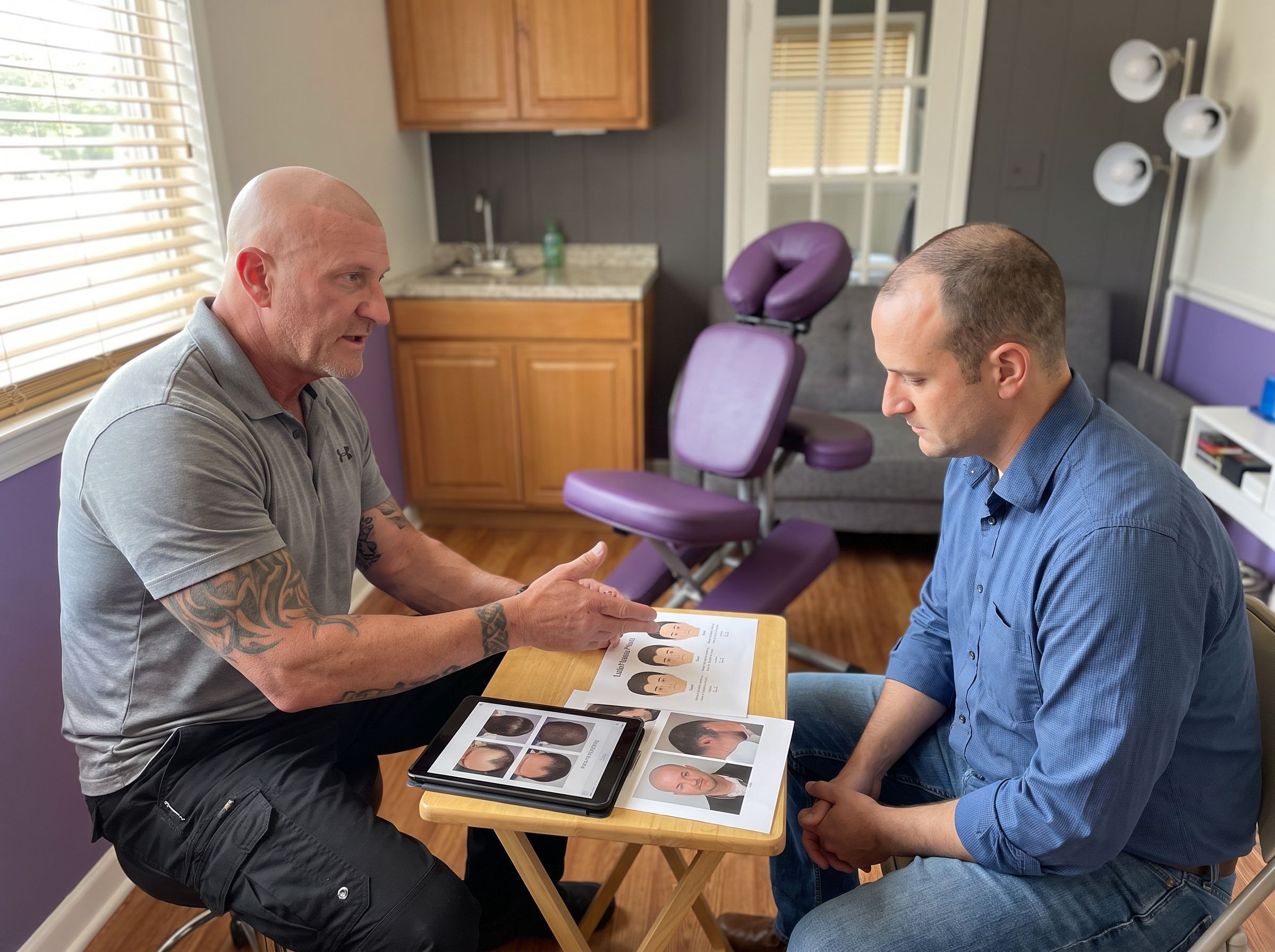
At consultation, I assess the existing hair, the pattern of thinning, your preferred hairstyle and your expectations. I want to understand whether you are trying to reduce visible scalp between existing hairs, soften a hairline, disguise a scar, or create the appearance of a closely shaved head.
Can SMP improve the appearance of low density?
Yes. Male density SMP is designed for men who still have existing hair but can see more scalp than they would like. I place small deposits of cosmetic pigment between the hairs to reduce the contrast between the scalp and hair. This creates the visual impression of fuller coverage. It does not grow hair or change natural hair growth.
The pigment is selected to match your current hair follicle color and applied where show-through is most noticeable. Depending on your pattern, that may include the crown, temples, front or areas affected by a previous transplant. The goal is a blended result, not a solid painted scalp. Some scalp showing through the hair is normal.
Density SMP can be useful for a man with medium hair density who wants his existing coverage to look less transparent. It can also help when thinning has become visible after a transplant, or when hair fibers and particular styling habits are no longer convenient. You can learn more about this approach on the male density SMP service page.
Before treatment, I mark the areas, discuss the hairline or boundaries, match the pigment, and apply numbing medicine. I aim for a blended, natural look rather than a heavily saturated scalp. The appropriate level depends on your hair color, skin tone, remaining hair and the result you want to maintain.
What should I check before choosing density SMP?
Start by reviewing real examples of the practitioner’s work, especially healed results and hairline work. A hairline that is too straight, too low or too dense can make an otherwise well-executed treatment look unnatural. Ask how the practitioner approaches your particular pattern rather than relying only on photographs of a different client.
Choose a licensed and experienced SMP practitioner who follows appropriate hygiene standards. You should be asked about allergies and relevant health history, and a patch test may be discussed before the full treatment. Disclose allergies honestly, including reactions to pigments, cosmetics or adhesives.
Expect realistic limits. SMP cannot restore follicles, stop male pattern hair loss or make every scalp completely invisible. It is a cosmetic camouflage treatment. Pigment is intended to be long lasting, but it gradually fades and may need maintenance. Sun exposure, skin type, medications and natural skin turnover can affect how long it remains visible.
After treatment, follow the individual aftercare instructions you receive. General guidance includes keeping the scalp dry at first, avoiding heavy exercise, steam rooms, hot showers and direct sun during the early healing period. Do not pick at scabs. Once healed, long-term broad-spectrum sunscreen helps protect the pigment.
I work with clients at Carolina Scalp Center in Raleigh, North Carolina. If you are unsure whether your concern is natural variation, progressive thinning or a suitable situation for density SMP, I would rather assess it carefully than make assumptions. You can contact Carolina Scalp Center to arrange a consultation.
If you would like to talk it through, you are welcome to book a consultation.
Frequently asked questions
Does hair density stay the same throughout a man’s scalp?
No. Density commonly varies between the front, temples, crown and sides. Some areas may naturally contain less hair or show more scalp because of the direction of growth. I compare similar areas rather than judging the whole scalp from one photograph or one visible patch.
Can thick hair still have low density?
Yes. Thickness describes the width of each hair strand, while density describes how many hairs grow in an area. Thick strands can provide good visual coverage even when there are fewer hairs. Fine strands can make the scalp look more visible despite a relatively healthy number of hairs.
Does hair color affect how dense hair looks?
It can. The contrast between your hair and scalp affects visible coverage. Dark hair may show more contrast against a lighter scalp, while lighter hair can appear less sharply defined. Lighting, skin tone, hair length and styling also influence your impression of fullness.
Can a man have normal density and still see his scalp?
Yes. Some scalp show-through is normal, particularly under bright overhead lighting, after washing, or where hair naturally changes direction. Seeing the scalp does not automatically mean you have hair loss. A change from your usual appearance is more informative than one isolated observation.
Should I see a doctor before considering male density SMP?
Consider medical assessment if hair loss is sudden, patchy, painful, inflamed or associated with scaling. SMP is a cosmetic camouflage treatment and does not investigate the cause of hair loss. Understanding the pattern and cause first can help you make a more informed decision about cosmetic options.
Will density SMP make my existing hair grow thicker?
No. Density SMP does not stimulate growth, increase the diameter of hair strands or alter follicles. It places cosmetic pigment between existing hairs to reduce the contrast between scalp and hair. The improvement is visual, so the treatment plan should reflect your current and expected hair pattern.
Can density SMP be used after a hair transplant?
It can be considered when transplanted areas or donor regions still look less full than expected, or when scarring remains visible. The treatment must be planned around the existing grafts, hair direction and scar tissue. A consultation is needed to decide whether the scalp is suitable and what result is realistic.